Articles
Camden M. Bucey/November 12, 2017
As a pastor of a church that confesses a Reformed and Presbyterian view of the fourth commandment, I often encounter questions as to how to observe it. The fourth commandment—to…
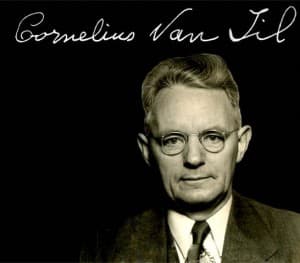
Cornelius Van Til/November 6, 2017
When I first heard about Barth’s concept of the “wholly other” God, it sounded perfectly orthodox. Barth’s emphasis on the qualitative difference between God and man struck me as…
Camden M. Bucey/October 31, 2017
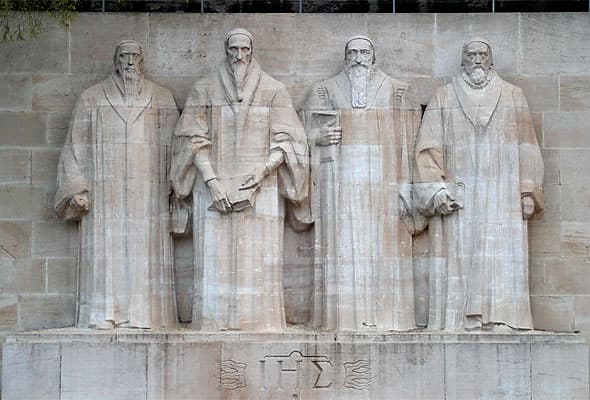
In celebration of the 500th anniversary of the Protestant Reformation, we’re running a store-wide sale. Our special 1517 Wittenberg stickers are 50% off, while you will save 15.17% on everything…
James J. Cassidy/October 30, 2017
In the last post we began to consider Van Til’s first published criticism of Barth. It was set in the context of a book review.[1] There we…
Daniel Ragusa/October 24, 2017
The word “life” (ζωή) or “eternal life” (ζωή αἰώνιος) is no general term for Paul to describe all people with beating hearts on earth, but the “most frequent mould into which…
Daniel Ragusa/October 14, 2017
God’s sovereignty and man’s freedom are often thought to be in competition with one another in a sort of zero-sum game: either God is sovereign or I am free. This has…
James J. Cassidy/October 2, 2017
It is often assumed that The New Modernism (1946) is Van Til’s first published writing in which he evaluates Barth’s thought. Actually Van Til first…
Glen Clary/September 29, 2017
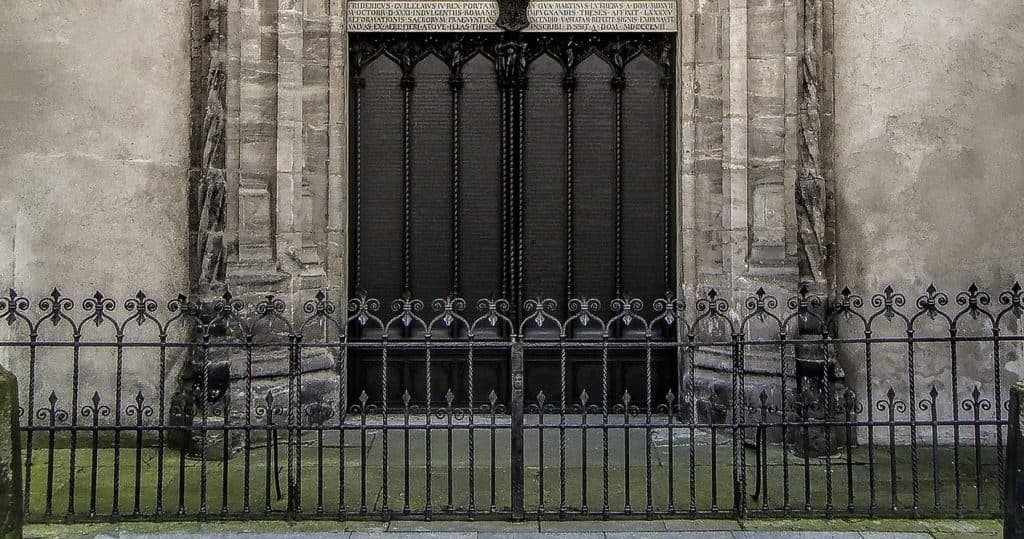
This year marks the 500 th anniversary of the Protestant Reformation. On Oct 31, 1517, Martin Luther nailed his Ninety-five Theses to the door of the church in Wittenberg. We typically…
James J. Cassidy/September 25, 2017
For Van Til no form of unbelief escapes the charge of rationalism. Irrationalism is only a disguised form of rationalism. But before getting to that, it might help to…
Daniel Ragusa/September 18, 2017
Teaching on the eternal state of the world to come may sound from the outset to be speculative and useless for practical living in the present. How can heavenly contemplation…
James J. Cassidy/September 18, 2017
Last week we talked about Barth’s “absolutely other” god. There we noted how Barth begins with an unknown and unknowable god. In other words, he begins with the god…
James J. Cassidy/September 11, 2017
It is often said that Barth believed in a god who was “wholly other.” It’s an oft repeated phrase, but rarely understood. Van Til would say “absolutely other.” By that…
James J. Cassidy/September 4, 2017
In chapter 3 of Christian Apologetics Van Til addresses the issue of the “point of contact” (Anknüpfungspunkt). That is to say, the point at which the believer may make contact…
Daniel Ragusa/August 30, 2017
The Reformation restored the holistic nature of faith to include both knowledge and trust in keeping with the organic unity of the whole person and our union with the whole…
James J. Cassidy/August 28, 2017
Both Van Til and Barth rejected all forms of bare theism. That is, they denied a generic view of God. Both believed this “god” was an idol. This is the…