37 episodes discuss Ephesians 2 — in canonical order, playable from the moment the passage comes up.
Ephesians 2
rs don’t deserve God’s kindness, but he raises those dead in sins and trespasses to life in Christ (Eph. 2). Hope rises from the dead in Naomi through Boaz’s kindness to her and Ruth. Join Mark and Andrew as they discuss how to preach or teach Ruth 2:14-23. Participants: Andrew M
Ephesians 2
e? Lake Mary FL: Reformation Trust Pub., 2008. ———. Saved by Grace: The Glory of Salvation in Ephesians 2 . Phillipsburg, N.J.: P R Pub., 2009. ———. Zechariah . P R Publishing, 2007. Other Formats Zotero RDF Dublin Core RDF Participants: Camden Bucey , Jim Cassidy , J
Ephesians 2
Wheaton, Ill.: Crossway Books, 2009. Phillips, Richard D. Saved by Grace: The Glory of Salvation in Ephesians 2 . Phillipsburg, N.J.: P R Pub., 2009. VanDrunen, David. A Biblical Case for Natural Law . AI, 2006. Other Formats Zotero RDF Dublin Core RDF Participants: Camden Bucey
Ephesians 2
Phillipsburg, N.J.: P R Pub., 2009. Phillips, Richard D. Saved by Grace: The Glory of Salvation in Ephesians 2 . Phillipsburg, N.J.: P R Pub., 2009. Scott, James M. Adoption as Sons of God: An Exegetical Investigation into the Background of [huiothesia] in the Pauline Corpus . W
Ephesians 2:1 · Robert Tarullo
Well, what it means in our lives is coming to understand who man is in his fallen estate. After the fall that we talked about, we talked about original sin and this being born dead in our trespasses and sins, as Paul says in Ephesians 2.1.
Ephesians 2:2 · Camden Bucey
And he can reproach the church for having subjected itself to all manner of commandments as if still living in the world. While elsewhere he speaks of the present aeon and of the world as the place where the believers must live godly lives and must shine as stars, the result is that in certain conte
Ephesians 2:7 · Camden Bucey
So if anyone has some thoughts on what the plural use of aeon in Ephesians 2.7 is and how that might fit within a two-age construction or not. Yes. I’d like to hear about it.
Ephesians 2:7 · Camden Bucey
Right. Yeah. There you go. So that’s a question yet to be entertained. And perhaps we’ll have a future episode to deal more exegetically with Ephesians 2.7 and the coming ages. Yes. What that means. Yes. That’s fun. Talking about things like that and working through those things is really exciting.
Ephesians 2:6
rist s second coming, they also are already raised with him and seated with him in heavenly places (Eph. 2:6). Adam York is pastor of Hope Orthodox Presbyterian Church in Grayslake, Illinois. Upcoming Livestream Donate now to receive an invitation to our private chat server. You
Ephesians 2:4–10
ace, is completely and totally lost in sin. Before Paul moves to extol the riches of God’s grace in Eph 2:4–10, he first digs down deep to expose the reality of sinful man’s helpless estate. The more we understand the depth of our sin, the more we will fall to our knees in wonder
Ephesians 2:4–6 · Camden Bucey
I think one of the greatest passages of this, at least my favorites, Galatians 2.20, but then also Romans 8.1-4. Greg, you bring up some other very important passages, Ephesians 2.4-6, Colossians 2.12-13, as well as 3.1-4. It’s everywhere in the Bible. It’s certainly in Paul. All these are Pauline p
Ephesians 2:5 · Lane G. Tipton
It is a monergistic, recreative act of God. Period. Ephesians 2.5. While dead in trespasses, God made us alive together with Christ. Sounds like the title of the lecture series, doesn’t it? Alive in Christ. I like that. Alive together with Christ. I’m preaching on that too at the end of the month. N
Ephesians 2:5 · Lane G. Tipton
However, what’s so interesting is in Ephesians 2.5, after Paul moves from 2.5 through 2.7, he comes to 2.8, and what’s invoked? You are saved by grace, Ephesians 2.5, and it’s all renovative sovereign work of God. You’re saved by grace, diapisteos, through faith.
Ephesians 2:5 · Lane G. Tipton
However, what’s so interesting is in Ephesians 2.5, after Paul moves from 2.5 through 2.7, he comes to 2.8, and what’s invoked? You are saved by grace, Ephesians 2.5, and it’s all renovative sovereign work of God. You’re saved by grace, diapisteos, through faith.
Ephesians 2:8 · Lane G. Tipton
Ephesians 2.8, you are saved by grace through faith as a gift, not of yourselves, not by works, lest you boast. There’s the gift character of faith. And then there are a few that we could talk about in terms of repentance. But Acts 11.17, to Gentiles as well as Jews, God has granted repentance that
Ephesians 2:8 · Lane G. Tipton
is a sovereign gift of God, Ephesians 2.8. That person receives and rests on Christ and Christ alone for His righteousness. So it’s His obedience and His satisfaction. Faith rests on the Christ who has offered comprehensive obedience in His life.
Ephesians 2:8 · Lane G. Tipton
Ephesians 2.8, a gift from God. Philippians 1.6, it will be perfected on the day of Christ.
Ephesians 2:8 · Lane G. Tipton
Ephesians 2.8, it is by grace you are saved through faith. And this, grace, faith, and salvation, is not of yourself. It is the gift of God. Not by works, lest you boast. So faith is kind of a capstone way of reminding man of his utter inability and the sovereign,
Ephesians 2:10 · Camden Bucey
How does it help to think about our productivity in light of Ephesians 2.10, for instance, thinking about the good works that God has laid out for us to do?
Ephesians 2:10 · Matt Perman
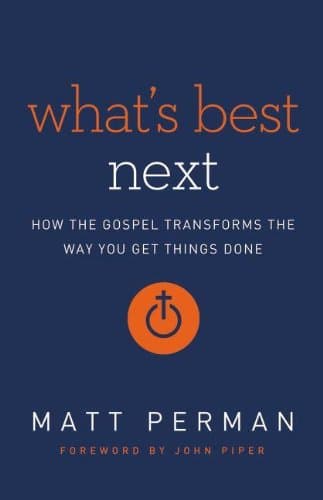
Yep. I think it gives new meaning to the things we do every day when we understand Ephesians 2.10 and how it relates to our productivity. So I argue in the book that good works are anything we do in faith. Ephesians 2.10 says we’re created in Christ Jesus for good works. So doing good works is one o
Ephesians 2:10 · Matt Perman
Yep. I think it gives new meaning to the things we do every day when we understand Ephesians 2.10 and how it relates to our productivity. So I argue in the book that good works are anything we do in faith. Ephesians 2.10 says we’re created in Christ Jesus for good works. So doing good works is one o
Ephesians 2:10 · Matt Perman
And so what I argue is when we are being productive, so to speak, like doing email, going to meetings, or even making dinner for the family, we are not just doing those things. We are doing good works. We are living out Ephesians 2.10. And that means that the things we do every day have great meanin
Ephesians 2:10 · Camden Bucey
How does it help to think about our productivity in light of Ephesians 2.10, for instance, thinking about the good works that God has laid out for us to do?
Ephesians 2:10 · Matt Perman
Yep. I think it gives new meaning to the things we do every day when we understand Ephesians 2.10 and how it relates to our productivity. So I argue in the book that good works are anything we do in faith. Ephesians 2.10 says we’re created in Christ Jesus for good works. So doing good works is one o
Ephesians 2:10 · Matt Perman
Yep. I think it gives new meaning to the things we do every day when we understand Ephesians 2.10 and how it relates to our productivity. So I argue in the book that good works are anything we do in faith. Ephesians 2.10 says we’re created in Christ Jesus for good works. So doing good works is one o
Ephesians 2:10 · Matt Perman
And so what I argue is when we are being productive, so to speak, like doing email, going to meetings, or even making dinner for the family, we are not just doing those things. We are doing good works. We are living out Ephesians 2.10. And that means that the things we do every day have great meanin
Ephesians 2:10 · Speaker 1
Sure. Yeah, so he empowers us to work. Ephesians 2.10, we are his workmanship created in Christ Jesus for good works, which God prepared beforehand that we should walk in them. Um, and so, uh, the, the idea is that, um, we’re, we’re not saved by our works, but we are saved unto good works, right? So
Ephesians 2:10 · Glen Clary
Ephesians 2, verse 10. You know, Paul talks about those who say they know God, but in works they deny Him. So, he talks about those who have an incredible profession of faith. I mean, where can it not be found in Paul? It’s everywhere in Paul.
Ephesians 2:11 · Jeff Waddington
Now, in terms of implications of reconciliation with God, obviously, Ephesians chapter 2, verses 11 through 22, is key. And I want to read those. And this is related to what we’ve already talked about, which is the Jew-Gentile question.
Ephesians 2:12 · Lane G. Tipton
Right. Well, I think you could summarize it in this way, that the covenants plural of promise—I’m thinking Ephesians 2.12—the covenants plural of promise are for Jew first and then Gentile.
Ephesians 2:12 · Gregg Allison
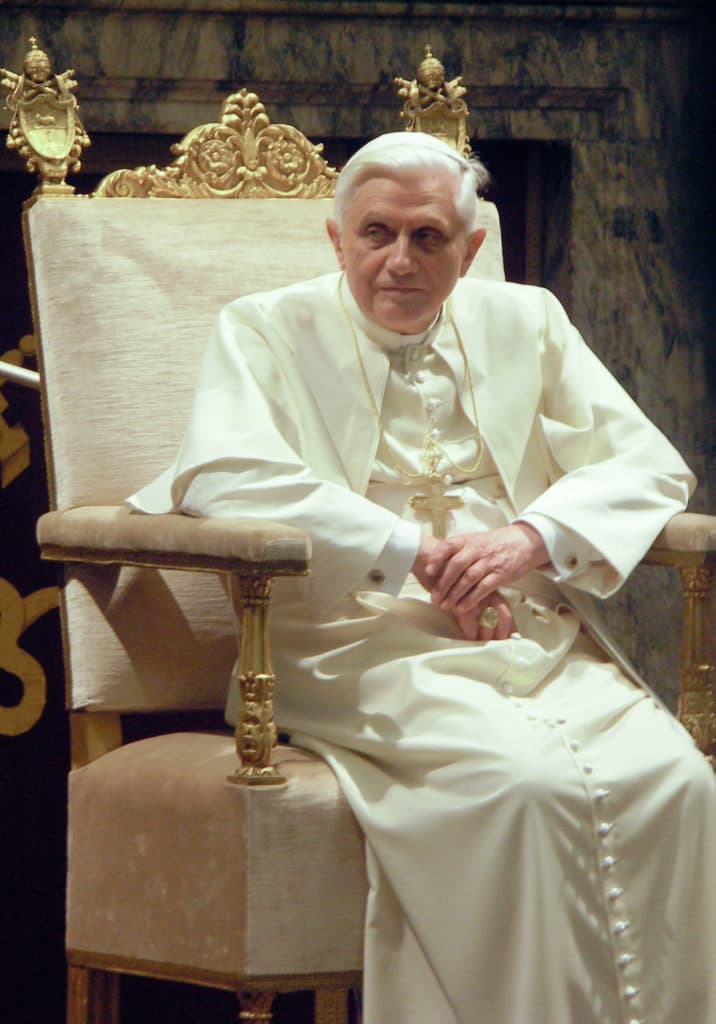
Yeah. It’s hard to pinpoint what hope is, according to Benedict, because in various places he makes it interchangeable with faith. So he particularly likes Ephesians 2.12, description of nonbelievers are those without hope and without God in the world. So for Benedict to receive hope is to come to k
Ephesians 2:15 · Lane G. Tipton
this as a light of revelation to the Gentiles, glory for the people of Israel. And what I think those parallel expressions remind us of is something similar to what Paul says in Ephesians 2.15, that the dividing wall of hostility between Jew and Gentile in Jesus Christ is broken down and together in
Ephesians 2:17 · Harrison Perkins
And that, you know, we can think about that in a couple of different ways. I mean, maybe you could go through the Psalms and think about how the king is the one leading the people to worship. But maybe more directly, you know, Ephesians 2.17 puts in front of, you know, Christ came and preached peace
Ephesians 2:17 · Will Wood
Yeah, yeah. Also an allusion to Nahum chapter 1 verse 15, where almost the same phrase is used there in the context of warfare with Satan who comes forth as a scatterer. But even in Ephesians, it’s Christ who goes before us preaching this gospel, Ephesians 2. 17, Christ came and preached peace to yo
Ephesians 2:18 · Ryan McGraw
that the text he chose was Ephesians 2.18, which basically says, through him that is through Christ, we come to the Father by one Spirit. So in other words, when he’s preaching two sermons on public worship, he chose an explicitly Trinitarian passage in which Jews and Gentiles together come to the F
Ephesians 2:18 · Ryan McGraw
One place to begin there would be to go back to the Ephesians 2.18 passage that I mentioned before. Owen does well to explain the passage in context, and what you find there is not only that Ephesians 2.18 is a Trinitarian passage about how we hold communion with God,
Ephesians 2:18 · Ryan McGraw
One place to begin there would be to go back to the Ephesians 2.18 passage that I mentioned before. Owen does well to explain the passage in context, and what you find there is not only that Ephesians 2.18 is a Trinitarian passage about how we hold communion with God,
Ephesians 2:18 · Camden Bucey
I’ll back up and start at Ephesians 2.18. For through him we both have access in one spirit to the Father. So then you are no longer strangers and aliens, but you are fellow citizens with the saints and members of the household of God, built on the foundation of the apostles and prophets, Christ Jes
Ephesians 2:20–22 · Lane G. Tipton
His people walk with him. The reciprocal character of the communion bond in spirit-forged union really kind of entails that the church be the anti-type of this tabernacle dwelling. And Camden, there are a lot of texts that Vos deals with. I’d like us to look and camp out as briefly as we can on Ephe
Ephesians 2:21 · Lane G. Tipton
It’s in that context that Ephesians 2.21 and 1 Peter 2.5 say that believers in union with Christ are living stones who are joined to the ascended Christ by the power of the Holy Spirit and through faith.
Ephesians 2:18 · Robert Letham
As Paul said, through him, we both, Jew and Gentile, have access, through Christ, we both, Jew and Gentile, have access by one Spirit to the Father, Ephesians 2.18. So our whole relation to God, our worship, prayers, and everything, is in union with Christ by the Holy Spirit.
Ephesians 2:20–22
, the temple of the one, true, and living God. Let s go to worship and you can see for yourself! In Ephesians 2:20-22 the Apostle Paul describes the church as a holy temple in the Lord. In this episode of Proclaiming Christ, we consider the foundation, the materials, the builder,
Ephesians 2:20 · Camden Bucey
Now, how would you see that in Ephesians 2.20? You draw this out in other courses you’ve taught, seeing the connection, I suppose, between what the apostles are doing and Christ’s work.
Ephesians 2:20 · Richard B. Gaffin Jr.
Yeah. Yeah, Ephesians 2.20 is right there at the end of the last half of Ephesians 2, beginning at verse 11 to the end of the chapter. And what Paul largely develops his argument there, in terms of the church as a building. So the church is, if you will, the great house-building project
Ephesians 2:20 · Nick Batzig
from Ephesians 2.20?
Ephesians 2:20 · Richard B. Gaffin Jr.
terms, as extensions, as you put it, of Jesus’ ministry. I think particularly from a couple of angles, from Ephesians 2.20, you see, we’re told that the apostles are, along with prophets, are the foundation, but we’re also told with Christ as the chief cornerstone. So there you see Christ and
Ephesians 2:20 · Lane G. Tipton
but I think this is a good and necessary consequence for what he’s saying. I think right here, you have something of a deep structural confirmation of the correctness of Richard Gaffin’s thesis in Perspectives on Pentecost. Because in that book, Gaffin argues that the correlation between prophets an
Ephesians 2:20 · Lane G. Tipton
Yeah. And in that volume, Gaffin so helpfully makes clear that one useful interpretive frame of reference for what’s happening in Acts 2 and throughout the book of Acts is found in Ephesians 2.20 and following where Paul there speaks of the apostles as foundational in the building of the kingdom of
Ephesians 2:20 · Camden Bucey
Yeah, so you speak about that foundation, you know, for people who’d like some textual warrant, you can look at places like Ephesians 2.20 and those sorts of things. But there is some measure, I want to use this word carefully so as not to confuse. I’ll let you clean up my mess. There is some measur
Ephesians 2:20 · Camden Bucey
So it reminds us of Ephesians 2.20, the foundation built on the prophets and the apostles.
Ephesians 2:20 · Glen Clary
there were unique gifts like the apostles and the prophets that belonged to, in a secondary and subordinate sense, the foundation of the Church. Christ is the sole foundation of the Church. He’s the cornerstone. But in a secondary and subordinate sense, the apostles and prophets were part of the fou
Ephesians 2:20 · Marcus Mininger
And sometimes exclusively so, like in Matthew 16, Peter says, you know, you’re the Christ, the son of the living God. And that Christ says on this rock or foundation, I will build my church. Or you think of 1 Corinthians 3, Paul says, no one can build on any other foundation other than that which is
Ephesians 2:20 · Camden Bucey
How do we understand the completion of that foundation, Ephesians 2.20, the foundation being built on the prophets and the apostles? How do we understand that that’s finished and that we’re not still seeking New Testament prophets and New Testament apostles to further build upon revelation in our pr
Ephesians 2:20 · Brad Isbell
So, you know, we had to build a new church 15, 10, 15 years ago because our old church had a big major foundation problem. And I remember I said. Yes. Not Ephesians 2.20. No, no, no, not at all. So, I remember saying to someone, you know, to help fund this new building, our new target market for mem
Ephesians 2:21 · Lane G. Tipton
Acts 2.33, Christ receives and pours out the Spirit. The church in union with Christ, filled with the Spirit, Ephesians 2.21, is the temple of God. And they’re in union with the Christ in whose heavenly mediation the church’s life is hidden, Colossians 3.3.