33 episodes discuss Romans 1 — in canonical order, playable from the moment the passage comes up.
Romans 1:16 · Camden Bucey
Yeah, I should mention, I mean, just for people, the books Mark is talking about right now is uncovering the theme of Revelation in Romans 1.16 through 3.26. It’s published by Moore Seaback. We did a two-part episode on this several years ago. So if you’re interested, this was, we did a very lengthy
Romans 1:16 · Marcus Mininger
I think allows us to see, I don’t know if all of it still, but, you know, way more of the data and understand why it’s there, right? Way more of the verses in Romans 1.16 through 3.26, you’re like, oh, that’s why he says it. And that makes perfect sense. And then he drives here and then he goes to a
Romans 1:17 · Marcus Mininger
Because God has made them visible. And Romans 1.18, the wrath of God is revealed. Romans 1.17, the righteousness of God is revealed. You go the other direction into chapter 3.5, the righteousness of God is demonstrated. Chapter 3.20, the knowledge of sin is communicated through the law. Then 3.21, 2
Romans 1:18 · Marcus Mininger
Because God has made them visible. And Romans 1.18, the wrath of God is revealed. Romans 1.17, the righteousness of God is revealed. You go the other direction into chapter 3.5, the righteousness of God is demonstrated. Chapter 3.20, the knowledge of sin is communicated through the law. Then 3.21, 2
Romans 1–3
through the lens of God’s unfolding revelation in Christ. Dr. Mininger provides fresh insights into Romans 1–3, uncovering the biblical theme of revelation and how it shapes our understanding of God’s righteousness. The conversation also tackles Hebrews 6, a notoriously difficult
Romans 1:16 · Camden Bucey
Today we’re going to be picking back up with a series we’ve already begun, uncovering and working through Marcus’s new book. Marcus wrote a dissertation in the Book of Romans, namely through chapters 1 through 3, and titled Uncovering the Theme of Revelation in Romans 1.16 through 3.26, Discovering
Romans 1:17 · Marcus Mininger
Sure. The basic thrust of the dissertation is to say that there’s a theme, the theme of Revelation, that runs all the way through this first section of Paul’s argument from Romans 1.17 specifically to 3.26,
Romans 1:17 · Marcus Mininger
There’s one in Romans 1.17, one in Romans 1.18, two of them in Romans 1.19, and another one in Romans 1.20. And then that was followed by a lengthy description of exactly how God’s wrath in particular is revealed right now against some people. So Romans 1.18 announces wrath, and then the rest of tha
Romans 1:18 · Marcus Mininger
There’s one in Romans 1.17, one in Romans 1.18, two of them in Romans 1.19, and another one in Romans 1.20. And then that was followed by a lengthy description of exactly how God’s wrath in particular is revealed right now against some people. So Romans 1.18 announces wrath, and then the rest of tha
Romans 1:16 · Camden Bucey
working through Marcus’s recent book titled Uncovering the Theme of Revelation in Romans 1.16 through 3.26, Discovering a New Approach to Paul’s Argument. It’s published by Moore Seebeck, and you’ll find links to that in the episode description, where you can purchase it and follow along. We’ve work
Romans 1:16 · Marcus Mininger
Paul’s statement about salvation, Romans 1.16, grounded in his statement about revelation, Romans 1.17, the same thing as what you see here, Romans 3.21 through 24. 21, but now without the law, the righteousness of God has been revealed, being testified by the law and the prophets, righteousness, I
Romans 1:17 · Marcus Mininger
Paul’s statement about salvation, Romans 1.16, grounded in his statement about revelation, Romans 1.17, the same thing as what you see here, Romans 3.21 through 24. 21, but now without the law, the righteousness of God has been revealed, being testified by the law and the prophets, righteousness, I
Romans 1:18 · Marcus Mininger
takes the very radical position that everything in Romans 1.18 through 3.20, which is this huge section of Paul’s argument, is Paul articulating his opponent’s viewpoint and then undermining that viewpoint. And so everything in Romans 1.18 through 3.20 theologically is in opposition to everything in
Romans 1:16 · Camden Bucey
Yes, this is our third installment. We’ve been talking for some time about doing this, and we’ve been able to get together a bunch and discuss what we want to do, and now we’re excited to open up Romans chapter 3. Because we’re discussing Marcus’s new book, Uncovering the Theme of Revelation in Roma
Romans 1:16–3:26 · Camden Bucey
and review parts one, two, and three. You can find information also about this book at more seebeck’s website, mohr.de. Information on that is available in the episode description. But we have been talking about the book by Marcus Mininger, Uncovering the Theme of Revelation in Romans 1.16-3.26, Dis
Romans 1:18 · Marcus Mininger
Well, thank you. A couple, you know, what you said brings to my mind, I don’t know if you all are familiar, there’s been a fairly recent enormous book put out by Douglas Campbell called The Deliverance of God, where he actually argues in a sense that the entirety of Romans 1.18 through 320, in other
Romans 1–3
Romans 1:16–3:26 · Camden Bucey
But that’s evident here when we start to look at the arguments and the materials therein. So the official title here, at least the published edition, I assume the dissertation was somewhat related. But the title here, Uncovering the Theme of Revelation in Romans 1.16-3.26, Discovering a New Approach
Romans 1:16–3:26 · Camden Bucey
So, Marcus, when you’re approaching this, you’re focusing specifically on Romans 1.16-3.26, but what really is the burden of your study as you look at that particular section of Romans? What are you attempting to do in this new work?
Romans 1–3
: Discovering a New Approach to Paul s Argument (Mohr Siebeck), Dr. Mininger argues for approaching Romans 1–3 through a new interpretive paradigm that features revelation over reading Paul s words primarily through a soteriological or sociological framework. Listen to the Series
Romans 1
mighty and fills the Earth ruling over the people of the Earth. But this is all of God, just as in Romans 1 God gives wicked people over to their sin so that they might fulfill its desires, and in the end reap the rewards of their wickedness. So to do these people love the city
Romans 1:1–4
st: The Benefits of His Suffering and Glory — The Gospel, the Old Testament, and the Two Estates in Romans 1:1–4 Participants: Camden Bucey , Jeff Waddington , Ryan Noha We turn to the mailbag today to answer questions from listeners. We discuss the “organic” unity of the Scriptu
Romans 1:1 · Camden Bucey
Yeah, Harry Reader started this morning with a message from Romans 3. And then a little bit later, it was Sinclair again? Sinclair on Romans 1. 1.16. 1.17. For I am not ashamed of the gospel, for it is the power of God for salvation for all who believe. Neither Jew nor Greek. What we see is the gosp
Romans 1:3 · Camden Bucey
So I thought that was really helpful, too. Romans is just obviously one of the key books of the Bible and the key passages we need to go to to understand what the gospel is. And they’ve treated that well here, describing for us Jesus Christ and the power that he is coming. And I like Romans 1.3 and
Romans 1:3 · Lane G. Tipton
Well, it’s important to recognize that when you read the New Testament scriptures, particularly Paul and Jesus, both present the gospel of Jesus Christ as contained in the scriptures of the Old Testament canon. Paul, for instance, in Romans 1, verses 3 and 4 particularly, and 2,
Romans 1:3 · Lane G. Tipton
And so, this one who is from the house of David, Luke 169, of the lineage of David, think Romans 1.3, he descends according to his flesh in the seed of David, and he descends, you can trace his human lineage through David.
Romans 1:3 · Speaker 13
And I think that this is a huge contrast with, say, Roman Catholic views, or especially the new perspective on Paul, which has a very similar soteriology to the Roman Catholic Church, is that, as you were just saying, that, you know, Christ’s justification is his resurrection. You know, 1 Timothy 3.
Romans 1:3 · John Fesko
a huge contrast, with say, Roman Catholic views, or especially, the new perspective, on Paul, which has a, very similar, soteriology, to the Roman Catholic Church, is that, as you were just saying, that, you know, Christ’s justification, is his resurrection, you know, 1 Timothy 3.16, or very similar
Romans 1:3 · Camden Bucey
But there has to be some sort of development and progression moving from the baptism to the transfiguration and then on to the resurrection, which there would be a public revelation, not just for the disciples, but now a public, open revelation of the Son of God. He was declared to be the Son of God
Romans 1:3 · Lane G. Tipton
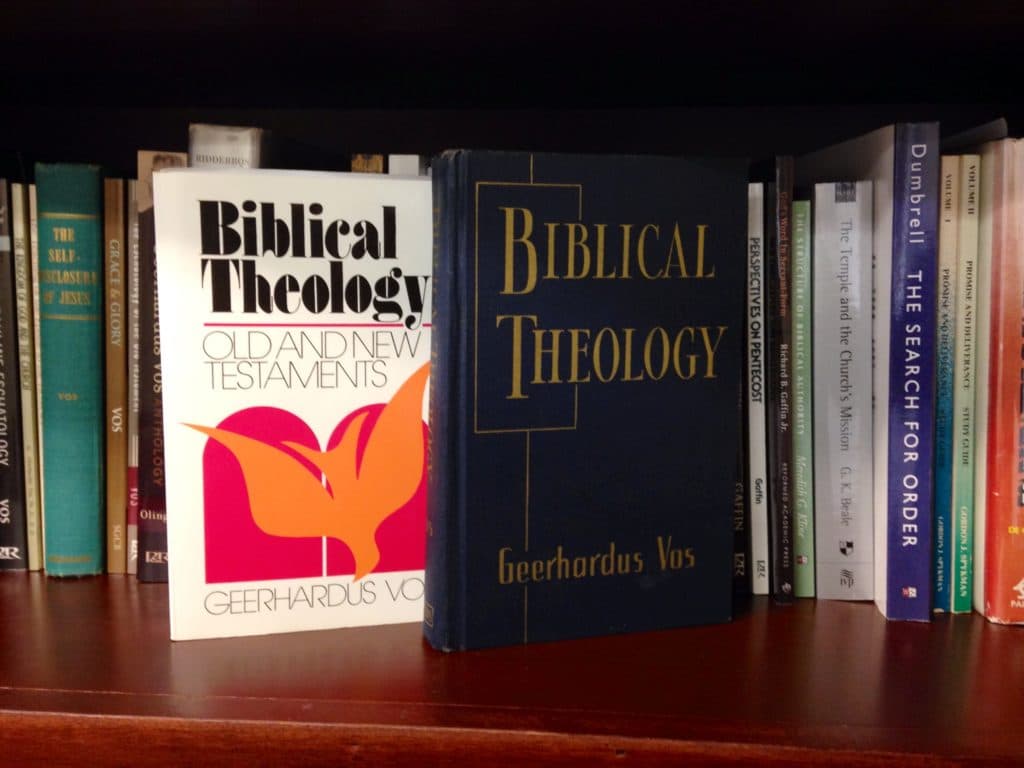
Romans 1.3 makes a statement, 3a, that Paul’s gospel is a gospel concerning God’s son. Geerhardus Vos, when he treats that, makes explicit, Pauline eschatology, that this pertains to the divine person of the Son of God. And of that person, Vos says in various places, I’ll give a few quotes,
Romans 1:3 · Lane G. Tipton
And I think this will prove helpful as we think about Romans 1.3 and 4. Geerhardus Vos, in his Reformed Dogmatics, uses a parallel pattern of reasoning in R.D. 1.178 on the doctrine of God and R.D. 349, Reformed Dogmatics 3, page 49, on the doctrine of Christ in the Incarnation.
Romans 1:3 · Lane G. Tipton
moves from humiliation to exaltation, and the locus of the mystery is right there. That’s Vos. And that is, I think, the proper way to forge the parameters for the mystery that’s set forth in Romans 1, verses 3 and 4. And one of these days, Camden, Lord willing, I’d like to spend some time in a cour
Romans 1:4 · Jim Cassidy
So there’s—yeah, it was in the context, I think, of the question asked of him concerning Romans 1. We just shot a YouTube video for this. But yeah, so Romans 1.4. Correct. The idea that he—Christ was declared to be Son, right, in power. In power. Yeah.
Romans 1:5
we need the man of heaven, the life-giving Spirit. Once there, we can offer the obedience of faith (Romans 1:5), which was the goal of the law in the first place (Romans 8:4). [1] See Dennis Johnson’s chapter in Resurrection and Eschatology: Essays in Honor of Richard B. Gaffin,
Romans 1:5 · Camden Bucey
Yeah, that might lend some light onto Romans 1.5 and the traditional difficulty of understanding what is the obedience of faith. I’ll just throw that out there as something to think about. I’m not going to comment.
Romans 1:5 · Camden Bucey
which is exactly what Christ is described as in 1 Corinthians 15. And once he enters in, he gives to us his spirit, and he brings us with him on that path of ascent, so that we can offer the obedience of faith, Romans 1.5, which was the goal, or at least an objective of the law in the very first pla
Romans 1:16 · Camden Bucey
We did a three-part series with him on his dissertation, just groundbreaking, fascinating work on the book of Romans. We spoke with him about uncovering the theme of Revelation in Romans 1.16 through 3.26.
Romans 1:16–3:26
mature in Christ (Col. 1:28). Episodes 524 — Marcus Mininger, Uncovering the Theme of Revelation in Romans 1:16–3:26 533 — Michael Kruger, How the Second Century Shaped the Future of the Church 540 — The Nature of Apostasy in Hebrews 6 542 — Bill Dennison, Karl Marx 551 — The Imp
Romans 1:17 · K. Scott Oliphint
And that new revelation consists primarily of God’s wrath that’s now revealed. And so when Paul is discussing that in Romans 1, he has in view, Romans 1.17, righteousness revealed from faith to faith. But before we understand that, we’ve got to see wrath revealed from heaven against all unrighteousn
Romans 1:19 · K. Scott Oliphint
Now, the suppression of the truth is something that Paul goes on to explain. I mean, I read an article just recently where somebody says what Paul means here is all truth, suppression of every bit of the truth. That’s not what he means exegetically. I mean, there are implications of that, I think. B
Romans 1:32 · K. Scott Oliphint
But he also wants to make clear that what’s going on in Romans 1.32, what’s going on is that this knowledge of God includes, some translations call it God’s decree. The word is dikaioma. It includes God’s righteous requirements. So that when God is revealing himself, he’s revealing as well the oblig
Romans 1:32 · K. Scott Oliphint
And what is it that agonized? Why was I spared? See, that’s because they recognize they don’t deserve to live and they recognize that it’s the grace of God that gives them that life. And that’s what Paul’s saying in terms of Romans 1.32. People recognize this, and he goes on to elaborate on that in
Romans 1:18 · Lane G. Tipton
That’s why Romans 1.18, the righteousness of God and wrath of God revealed from heaven, that’s inescapable. Camden, you were going to say something?
Romans 1:18 · Lane G. Tipton
After the fall, Vos makes a point that I think is very important here on page 41, the first full paragraph, the feelings of shame and fear were produced in fallen man by general revelation. Now, what I think he might have in mind there is in Romans 1.18, Paul says that the wrath of God is revealed f
Romans 1:18 · Jeff Waddington
don’t stick your finger in that outlet, that live outlet, because if you do, you will get electrocuted. And he tried, and Dodd tried to argue that there was a, the way the world operated was that if you do that, if you commit sin, wrath will follow. But it was not personal. The problem, of course, i
Romans 1:18 · Camden Bucey
Yeah, and so that’s the leap and the different direction he takes off Romans 1.18.
Romans 1:19 · Bill Dennison
And in that way, he brings to mind upon the nations in some way, I would argue, a kind of relative consciousness with respect to common grace concerning his existence and morality. I’m thinking here, obviously, of the Romans 1.19 passage
Romans 1:20
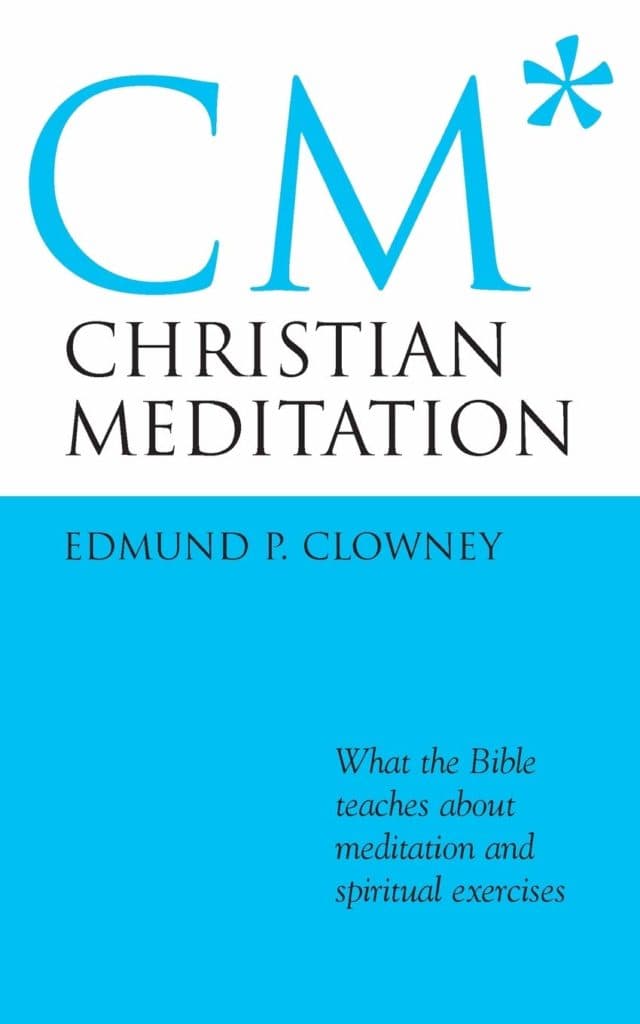
ternal power and divine nature, have been clearly perceived through the things that have been made (Rom. 1:20). Clowney explains how Christian meditation is (1) rooted in God’s truth, (2) responds to the love of God, and (3) is an excercise of praise unto him. It is critical for
Romans 1:20 · Lane G. Tipton
or it refocuses our understanding of the census divinitatis. It is a Son-centered activity that man knows God naturally, innately, through this implanted knowledge. But secondly, and I’ll be a briefer here, this also includes external general revelation, external natural revelation. Think of Romans
Romans 1:20 · Lane G. Tipton
revelation internally without excuse. Yeah, of course. It’s really quite a sun-centered enrichment of our traditional go-to text in Romans 1.20. I think that’s a helpful frame of reference. it’s a sun-centered expansion, or it’s taking you behind the scenes to
Romans 1:20 · Jeff Waddington
The last chapter of the dissertation, chapter 5, has a section on Edwards’ sermon on Romans 1, verse 20, which has a very long title, God’s Attributes Seen in the Glory of Creation. That’s not the exact title.
Romans 1:20 · Jeff Waddington
Yeah. He does. That’s where it comes from. He talks about the marvelous contrivance of the human body, and of course he’ll argue that the human soul is an even more marvelous creation. Yeah. However, the interesting thing when you look at this, first it’s an exposition of Romans 1.20. It’s in a serm
Romans 1:20 · Jeff Waddington
or scriptural foundation. For instance, the one place where he rolls out all of the major classical arguments, the onological, the teleological, the cosmological, is in a sermon on Romans 1.20 where Paul talks about ever since the creation God has been made known. And Edwards believes he’s actually
Romans 1:20 · K. Scott Oliphint
That is, God has ensured from the beginning of creation, as Paul says in Romans 1.20, God has ensured that every person made in his image will necessarily know him. Again, as you’re underscoring, not some people. The exegetical point that Paul has made, the biblical point Paul is making that you can
Romans 1:20 · K. Scott Oliphint
Not the kind of detail that you have given in God’s written word. And you surely don’t have the revelation of redemption in Christ revealed through creation. But Paul is saying that there is revelation sufficient so that every person in Romans 1.20 is on apologetus, which means without a defense or
Romans 1:32 · K. Scott Oliphint
So that when Paul says in Romans 1.32 that even though people know the righteous requirements of God, he says that the knowledge of God includes the dictynum, the Greek word, the righteous requirements, sometimes translated decrees. It’s not a good word to translate, I don’t think. Knowing the right
Romans 1:20 · Lane G. Tipton
And third, that internal revelation is the sense of deity that’s inalienably and ineradicably engraven upon him. And Van Til is rooting this. This will be key. In Romans 1.20, the census divinitatis, the knowledge of God made evident in them. And Romans 2.15, the law of God, the works of God’s law,
Romans 1:20 · K. Scott Oliphint
And it’s by virtue of that knowledge and the suppression of it that they are rendered without excuse before God at the judgment, Romans 1.20. So if that’s the case then, if it’s not now a capacity to know God, but actual knowledge of God, that’s going to change the way we think about epistemology. B
Romans 1:23 · K. Scott Oliphint
knowledge. And that suppression of the knowledge is going to take on different forms, surely, of idolatry, as Paul makes clear in Romans 1.23 and 25. It’s going to take on different views of knowledge and different aspects of knowledge that are going to work themselves out in terms of idolatry. But
Romans 1:20 · Carlton Wynne
he’s borrowing it from Abraham Kuyper. In the Encyclopedia of Sacred Theology, Kuyper says this, in consequence of common grace, there remain the rudera or sparks of light in the center, and the curse upon nature has not yet come in such measure, but that invisible things are clearly seen because un
Romans 1–3
: Discovering a New Approach to Paul s Argument (Mohr Siebeck), Dr. Mininger argues for approaching Romans 1–3 through a new interpretive paradigm that features revelation over reading Paul s words primarily through a soteriological or sociological framework. In this second episo
Romans 1–3
: Discovering a New Approach to Paul s Argument (Mohr Siebeck), Dr. Mininger argues for approaching Romans 1–3 through a new interpretive paradigm that features revelation over reading Paul s words primarily through a soteriological or sociological framework. In this fourth episo
: Discovering a New Approach to Paul s Argument (Mohr Siebeck), Dr. Mininger argues for approaching Romans 1–3 through a new interpretive paradigm that features revelation over reading Paul s words primarily through a soteriological or sociological framework. In this third episod