12 episodes discuss Romans 5 — in canonical order, playable from the moment the passage comes up.
Romans 5:14 · Danny Olinger
The abnormal and the eschatological are not so logically correlated that the one can be postulated from the other. But the world of creation and the world of eschatology are thus correlated, the one pointing forward to the other. On the principle of typology, the first Adam prefigures the second Ada
Romans 5
he Covenant of Works 00:10:49 Summary in The Eschatology of the Psalter 00:16:20 Adam and Christ in Romans 5 and 1 Corinthians 15 00:26:06 The Promise of Life in the Covenant of Works 00:41:28 The Nature and Destiny of Man 00:48:43 Reformed and Roman Catholic Theology 00:59:15 Th
Romans 5:2 · David Barry
He mentions the glory of God in Romans 5 verse 2 as the hope that is now open to us because of our justification. And then lo and behold, if you go to Romans chapter 8, the pathway to glory is going to be through suffering with Christ. All of creation is groaning, looking forward to the revelation o
Romans 5:3 · David Barry
Which is, by the way, is exactly what Paul also does in Romans 5 verse 3. That’s right. Right. Suffering, then glory, leading to hope. Yeah. Right? And suffering is another one. Not only mankind, but also creation, but especially believers in union with Christ. That’s Romans 5, 2, and 3. And then th
Romans 5:5 · David Barry
And this is what it’s going to look like. I will restore you. And then we have this prophetic vision to give it some character. Well, the outpouring of the Holy Spirit across the prophetic corpus is the sign of the end of exile. And there in Romans 5.5, we see Paul, who was no fool, who was a Pharis
Romans 5
The Deeper Protestant Conception 00:29:36 The Original Context of Romans 00:33:49 Shared Themes in Romans 5 and 8 00:37:25 Romans 7 in Context 00:43:52 The Connection between Romans 7 and 8 00:50:15 The Holy Spirit in Romans 8 00:54:22 Biblical Chapter and Verse Markers 00:56:15
Romans 5:1 · Camden Bucey
forgiveness proceeds. Yeah. I’m thinking a lot about Romans 5.1. Therefore, since we have been justified by faith, we have peace with God through our Lord Jesus Christ. That verb there we have is Eccleman with an Omicron. But there’s a textual variant, most likely, probably because of a
Romans 5:1 · Lane G. Tipton
So he qualifies it as a tithely. It’s a forensic basis. So this thought comes to mind. If you mean that justification is the forensic basis for things that follow justification, like peace with God, Romans 5.1 and following, I have no problem.
Romans 5:12 · Jeff Waddington
In several places, Romans chapter 5, verses 12 to 21 being prominent, and then 1 Corinthians 15, 45 to 49.
Romans 5:12 · Chris Brauns
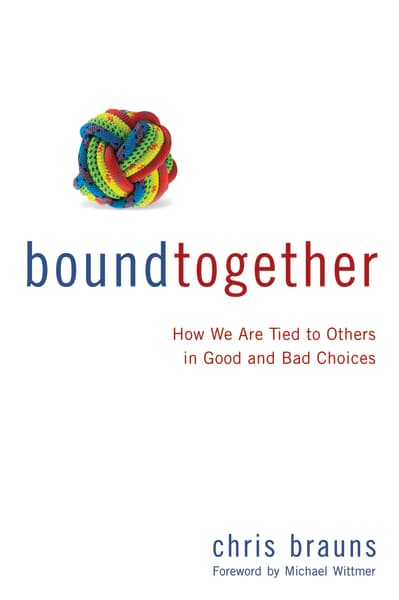
Well, I think the heart of the book, of course, as you’ve already alluded to, is Romans 5, verses 12 to 21, that great passage, where Paul says, Just as the trespass of one man, Adam, brought condemnation for all men, so also by the result of one act of righteousness, the many, or by the obedience o
Romans 5:12–19 · Lane G. Tipton
but in the context of Romans 5.12-19, the only gifted righteousness that comes into view is that which belongs to Christ in his obedience and in his satisfaction, and then by extension, as he ever lives in righteousness. And so the Protestant point, the Reformed point, is we receive that by that rig
Romans 5:17 · Lane G. Tipton
Yeah, it’s just saying the same thing with a little bit different view, or a point of view, but Romans 5.17, those who receive the abundance of grace and the free gift of righteousness reign in life through the one man, Jesus Christ. In the context, we don’t have time to get into the details,
Romans 5:12 · Camden Bucey
And as Jeff already mentioned, if we read Romans chapter 5, verses 12 through 21, we see very clearly this comparison of covenants and representation with Adam represents all humanity, except Jesus Christ, because he was not born via ordinary generation. He was not born with original sin according t
Romans 5:12 · Jim Cassidy
having accomplished the work that you gave me to do not to mention Paul’s doctrine in Romans chapter 5 verses 12 and following and his idea that the first man is a type of Christ and the one who brought condemnation to all precisely at the point of his law breaking was pointing to the one the second
Romans 5:14 · Lane G. Tipton
So, in Romans 5. So, in Romans 5.14, the third usage, Vos says, is probably the best one for Romans 5.14. And then, he notes that there are two examples where, in the New Testament, the type is the impression, and it corresponds to an anti-type, a counter-impression.
Romans 5:14 · Lane G. Tipton
So, in Romans 5. So, in Romans 5.14, the third usage, Vos says, is probably the best one for Romans 5.14. And then, he notes that there are two examples where, in the New Testament, the type is the impression, and it corresponds to an anti-type, a counter-impression.
Romans 5:14 · Camden Bucey
And for him, that was the only way that you could ensure that you weren’t somehow creating your own connections rather than abiding by those in Scripture. But the problem with—well, one of the several problems in Roy Zook’s book there was the fact that, you know, we have Adam in Romans 5.14 describe
Romans 5:14 · Camden Bucey
Just to clarify that Romans 5.14, because I think my comment was a little opaque, the verse says, Yet death reigned from Adam to Moses, even over those whose sinning was not like the transgression of Adam, who was a type of the one who was to come. John Piper understands in his book, Let the Nations
Romans 5:17 · Lane G. Tipton
saying, that there is no possible sense in which declaration could ever be prior to imputation. And I remember him talking about that in light of Romans 5.17. Oh, and talking about that in light of Romans 4.17, and tethering those texts in Romans, when God declares Abraham just, in light of what doe